Inside the product
The paging controller
Zones, endpoints, schedules, alerts and audio sources from one interface.
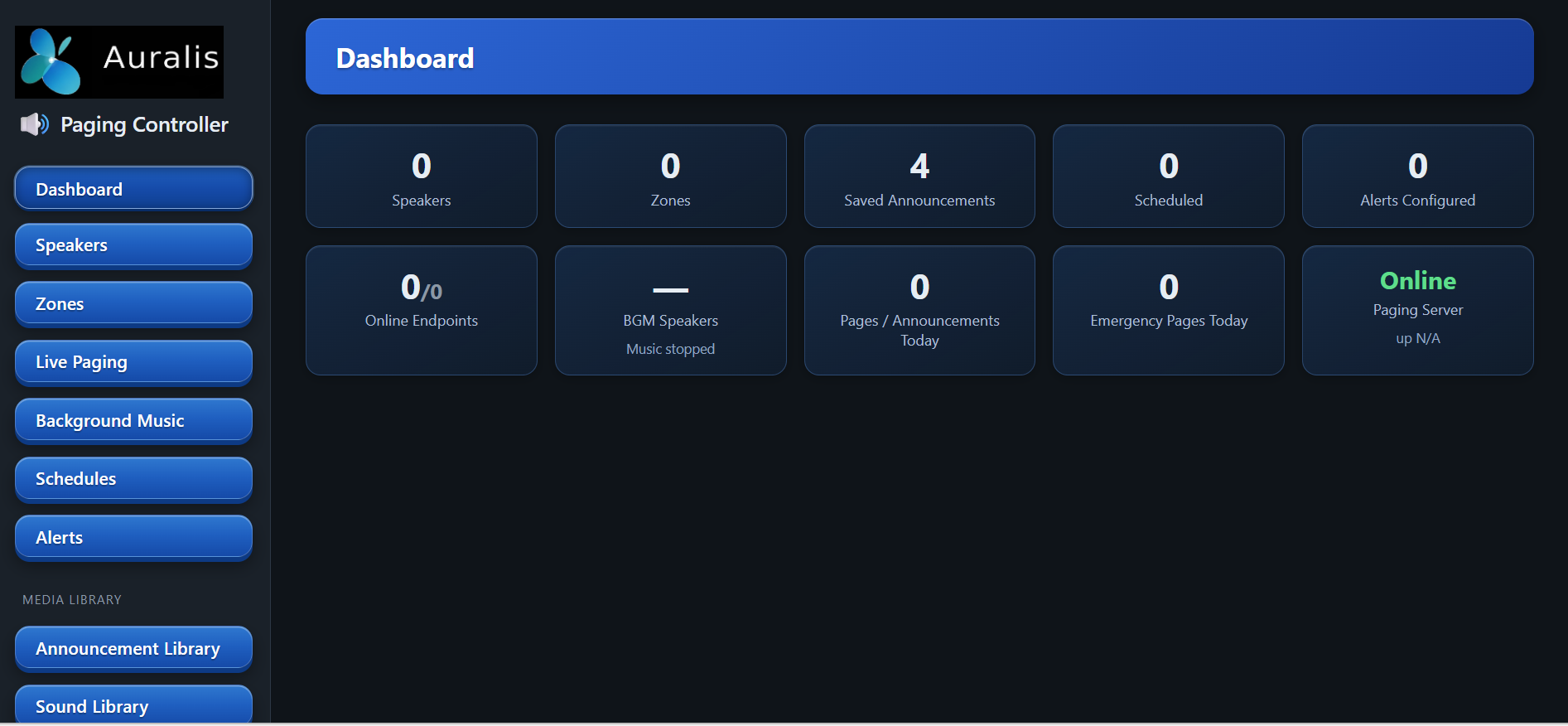
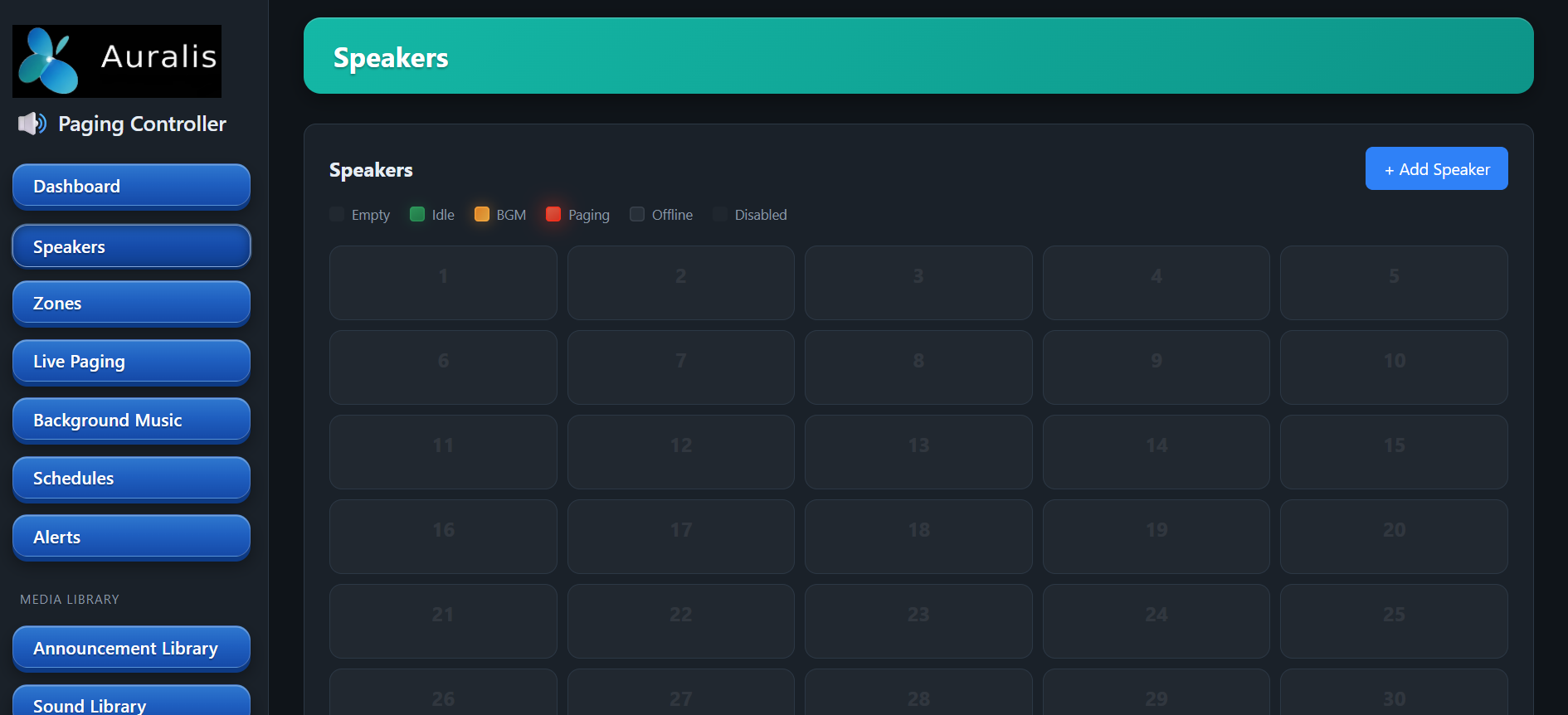
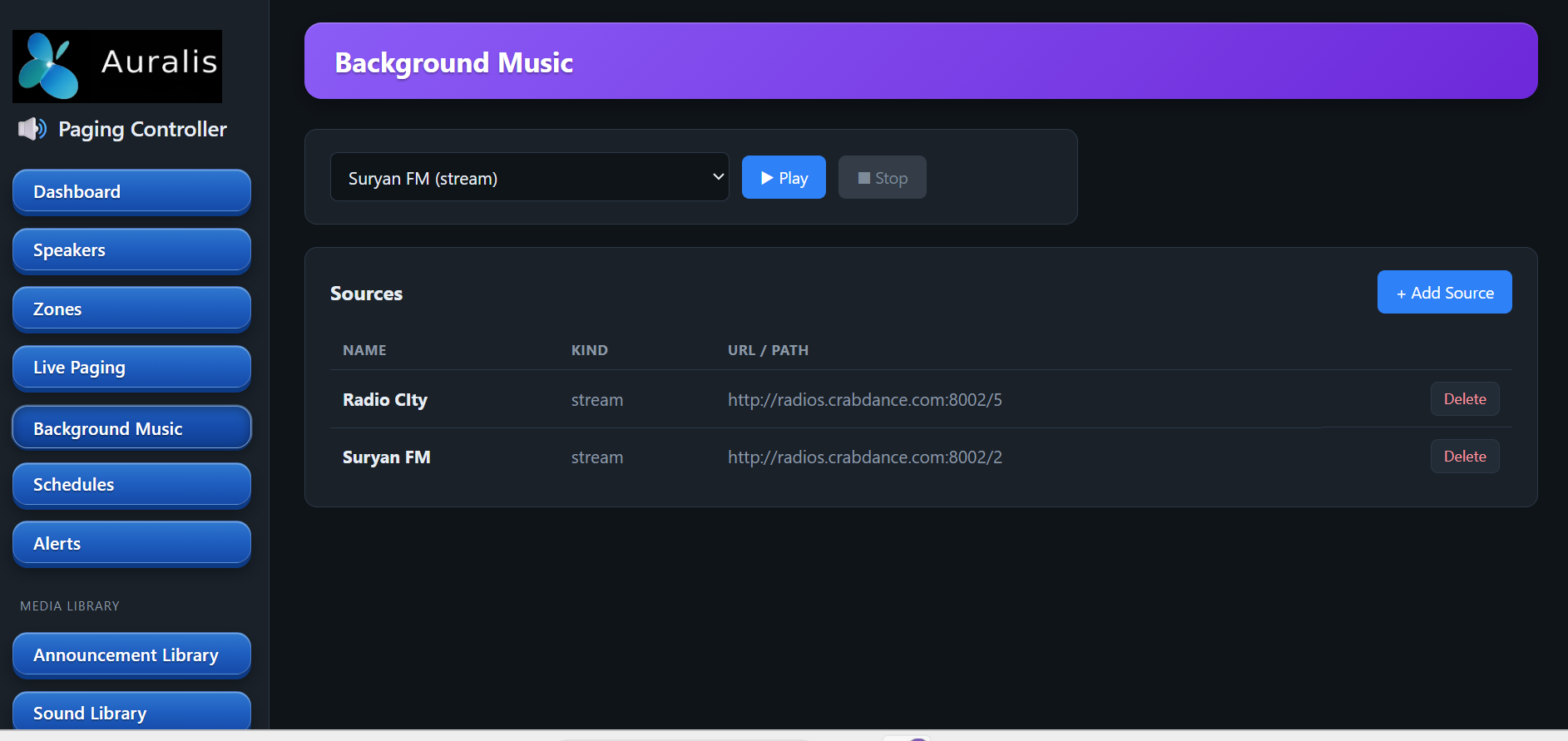
Broadcast to any zone, automate shift bells and scheduled announcements, and connect door phones and SIP handsets — all over the network you already run, from a single console.
Traditional public-address systems are built around an amplifier rack, a run of speaker cable to every corner of the site, and a controller that only that vendor can program. Extending one means pulling more cable; replacing one means replacing all of it.
An IP paging system uses the structured cabling that already reaches every room. Endpoints are network speakers or SIP devices, zones are software, and the controller is a server running Asterisk — the open-standard telephony platform, not a closed protocol. Adding a zone is a configuration change. Adding a building is a switch port.
Schools and colleges use it for class bells, assembly announcements and emergency drills across a campus. Factories and warehouses use it for shift changes, muster calls and safety announcements in areas where a phone is not practical. Hospitals, hotels and office campuses use it for zoned announcements and door intercom on one system rather than three.
Because the controller is software, it can be driven by other software. A safety-zone breach detected by video analytics can trigger an announcement in that zone. A threshold crossed on an IoT sensor can raise a spoken alert and place a call to the person on duty. That kind of cross-system behaviour is the reason we build the whole stack ourselves.
The system is installed on site and owned by you, including the configuration. There is no per-zone licence and no annual renewal that stops the bells ringing.
Zones, endpoints, schedules, alerts and audio sources from one interface.
Paging is most useful when the systems around it can trigger it.
Tell us the buildings, the zones and what has to be heard where. We will size the system around it.